Privacy Tech
Home Security That Answers to You — Not a Server Farm
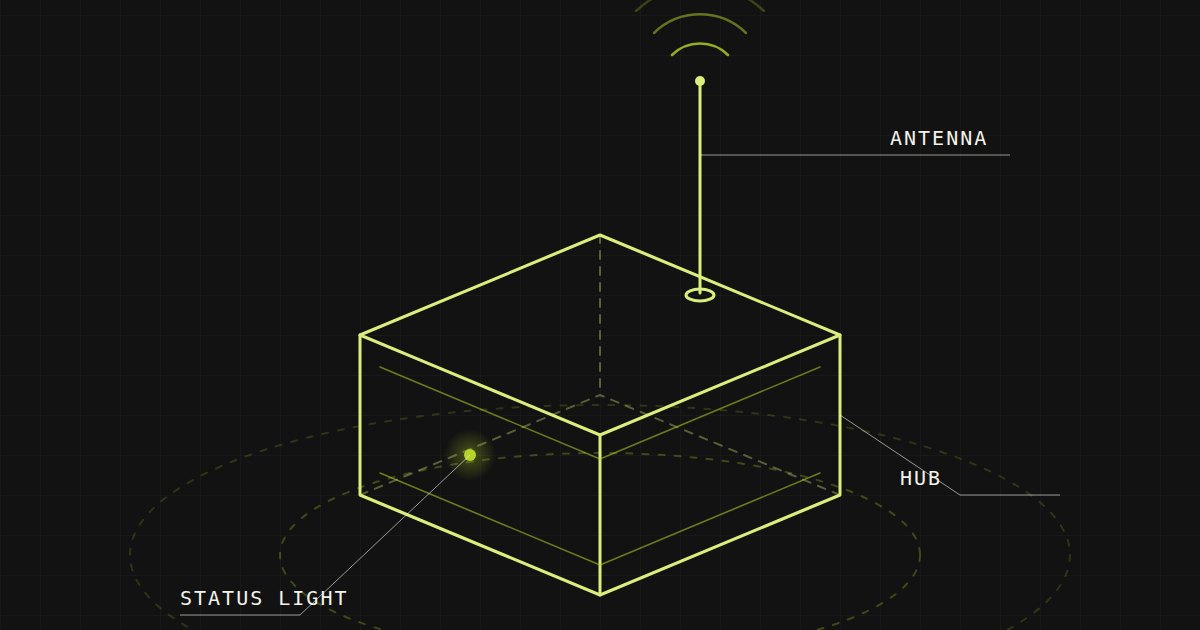
Images show concept renders. Final hardware may differ.
The camera on your porch works for someone else
Walk through a modern "smart" home and count the devices watching it: doorbell camera, driveway camera, motion sensors, door sensors, a hub listening for glass break. Now ask a harder question — where does all of that go? For almost every system on the market, the answer is the same: to a server farm you will never see, owned by a company whose business model depends on keeping you subscribed.
That arrangement has a cost. Your family's daily rhythms — when the kids get home, when the house is empty, what your living room looks like at 2 a.m. — become records on someone else's hardware, governed by terms of service you never negotiated and retention policies you cannot audit. Cloud security vendors have handed footage to third parties without warrants. They have been breached. And when their servers go down or your internet drops, the system you paid for goes blind at exactly the wrong moment.
Security should not require surrender
We built Alias on four pillars: Privacy, Sovereignty, Resilience, and Human Ownership of Data. Home security is where all four converge — because protecting your property should never mean handing over a live feed of your life.
In the Alias model, the brain of your security system lives in your house. Homebase, our central AI hub, runs vision and audio intelligence locally — classifying a person at the gate versus a deer at the fence line, a gunshot versus a slammed tailgate — with no cloud round-trip and no footage leaving the property. Cameras record to storage you own. Sensors report over an encrypted local mesh. Even third-party smart devices can route through Homebase instead of phoning home to their manufacturer.
Alerts land on Rogue, our rugged full-touchscreen handheld, over encrypted peer-to-peer links that keep working when the internet does not. And because the AI filtering happens on your hardware, Rogue only pings you when something actually demands attention — no notification spam, no false-alarm fatigue, no algorithm in a distant data center deciding what you see.
A Friday night, forty minutes from town
Picture a family on twelve acres — main house, workshop, a long gravel drive. Friday night, a storm takes out their internet, the way it does a few times every year. With their old cloud system, that meant no alerts, no feeds, no history until service came back.
With sovereign infrastructure, nothing changes. At 11:40 p.m., the driveway camera picks up headlights. Homebase classifies the vehicle locally, checks it against the family's known list, and pushes one alert across the mesh to both parents' handhelds: unknown truck, gate, live view attached. It turns out to be a neighbor checking on a downed fence. The family watches, confirms, and goes back to bed. No internet involved. No footage uploaded. No stranger's server ever knew it happened.
Own the watchtower
The security industry has trained families to accept a trade: protection in exchange for surveillance. We think that trade is a failure of imagination. You can have cameras without a cloud, intelligence without an upload, and alerts that survive an outage — if the infrastructure answers to you.
That is what we are building: a family of devices where your home's security reports to exactly one authority — the people who live there. Join the waitlist at aliascomms.com and be first in line when Rogue ships.