Product Vision
Meet Homebase: The Hub That Keeps Your Data on Your Property
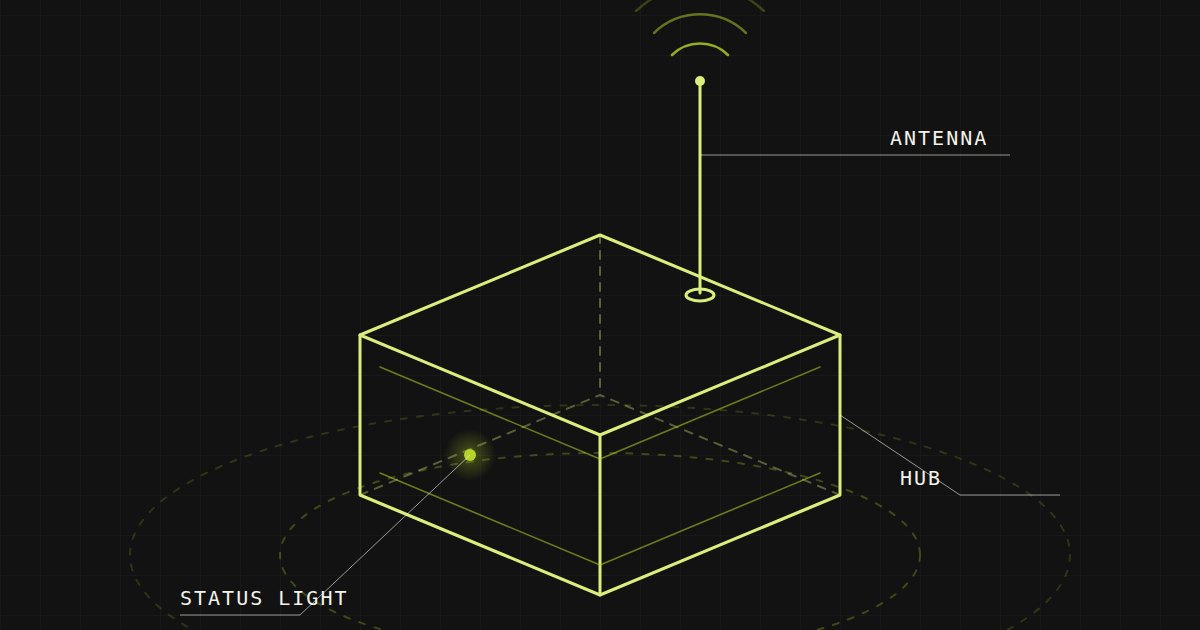
Images show concept renders. Final hardware may differ.
Rogue gets most of the attention, because it's the thing you hold. But a lot of what makes an Alias setup useful at home happens on a quieter box that never leaves the house. That's Homebase.
Homebase is still in development, so treat this as a look at what we're building rather than a spec sheet you can order from. Here's what it's for, and why we designed it the way we did.
One hub, on your property
Homebase is the always-on center of an Alias setup. It sits on a table or mounts on a wall, stays powered, and ties everything on your property together: your Rogues, your Repeaters, and the smart-home gear you already own.
The rule it's built around is simple. Your data stays on your property. Messages, sensor readings, automations and camera footage are handled by Homebase itself, not shipped off to a server somewhere so a company can process them and send an answer back. Camera footage in particular never leaves.
What it actually does
- Local AI. The smart part runs on Homebase. When a camera spots movement at the gate, Homebase decides whether it's worth bothering you about, without sending the video anywhere to be judged.
- Alarm control. Arm, disarm and get alerts from your alarm system locally, over your own network.
- A home for your automations. Homebase runs an MQTT broker, which is a plain, widely used way for sensors, switches and other devices to pass messages to each other. Your automations run there, on your hardware.
- A gateway to the mesh. Homebase has a high-gain LoRa radio, so it can talk to the Rogues and Repeaters on your land. An alert from the house can reach a Rogue out at the back fence line without a cell tower involved.
- More than one property. If you have a house and a cabin, or a home and a shop across the county, Homebase is designed to link them so you can manage both from one setup.
Plays well with what you already have
Most people already own a few smart devices, and we don't expect anyone to throw them out. Homebase speaks Thread and Matter, the open standards a lot of newer smart-home gear uses, so those devices can report to Homebase instead of phoning home to their manufacturer.
For connections, the plan is Wi-Fi 6, wired Ethernet, Bluetooth 5.3, Thread and Matter, and LoRa for the mesh.
Walled off, on purpose
A hub that touches your cameras and alarm deserves to be kept away from everything else on your network. Homebase is designed for VLAN isolation on Ubiquiti networks, so it can sit on its own segment, separate from the laptops, TVs and guest devices in the house. If something else on your network gets compromised, that separation makes it much harder to reach the box that runs your security.
Why not just use the cloud?
Because the cloud is someone else's computer, and it comes with someone else's rules. When the internet goes down, cloud cameras stop alerting. When a company changes its terms, your footage is governed by the new ones. When there's a breach, your house is part of it.
Homebase is our answer to that. The brain of your home lives in your home, and it keeps working when the internet doesn't.
We'll share more as the design firms up. You can follow along on the Homebase page, or join the waiting list to hear when there's news.