Privacy Tech
Your Family's Conversations Are Not a Product
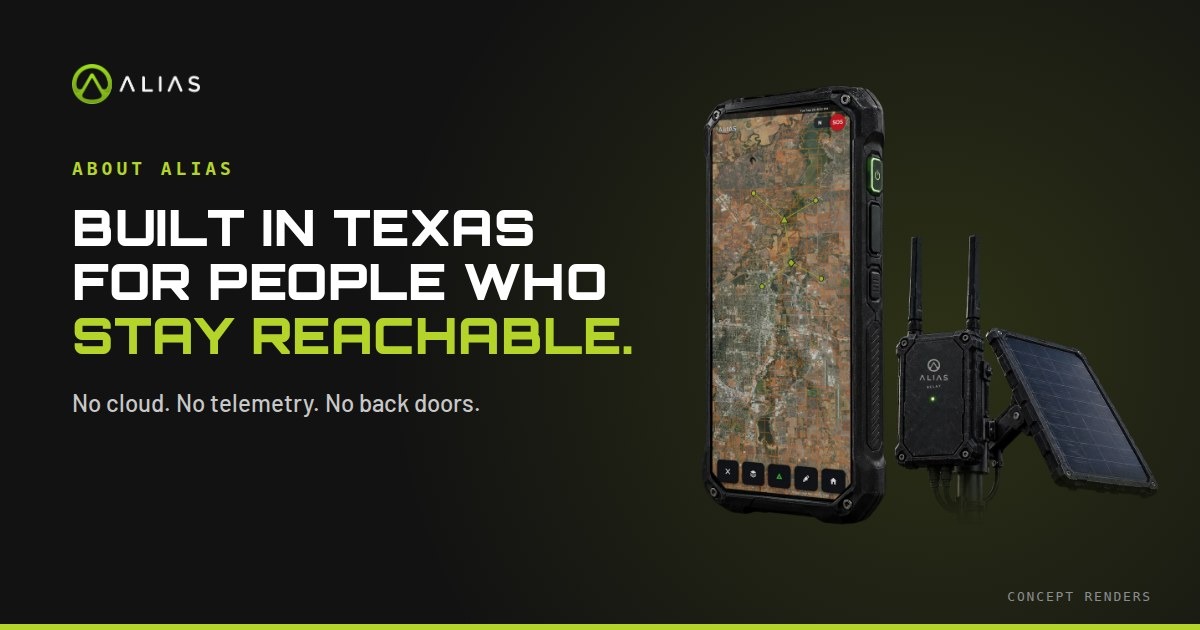
Images show concept renders. Final hardware may differ.
Scroll back through your family's messages from the past week. A kid's rough day at school. A doctor's appointment that worried you. The garage code for the babysitter. An argument that ended with "love you, see you at dinner." None of it was written for an audience. All of it had one.
Every one of those messages took a detour. Between your phone and your husband's, your daughter's, your dad's, it passed through servers owned by companies you've never met, operating under terms you never read, in jurisdictions you couldn't name. Even when the content is encrypted, the metadata usually isn't — who talked to whom, when, how often, from where. That is enough to reconstruct your family's entire rhythm: when the house is empty, when the kids walk home, when something is wrong. A privacy policy is a promise. Architecture is a fact. And the architecture of mainstream messaging is built to pass your family's life through someone else's hands.
The risk isn't hypothetical. Breaches spill years of family history in a single dump. Platforms change their terms overnight. Accounts get locked, and with them every photo and conversation your family ever shared. Meanwhile the quiet harvesting continues: interests inferred, ads targeted, profiles of your children assembled before they're old enough to consent to anything. This is the uncomfortable truth of cloud dependency — you cannot delete what you do not control, and you cannot protect what you do not own.
We built Alias around four things we refuse to compromise on. Privacy: your conversations are encrypted end to end, readable only by the people you choose. Sovereignty: your network belongs to you — no carrier contract, no account on someone else's server, no third party deciding who is allowed in. Resilience: your family stays connected even when the tower or the internet doesn't cooperate. Human Ownership of Data: every message, every contact, every memory lives on hardware you hold, not in a data center you will never see.
That is what Alias Rogue is for. It's a rugged full-touchscreen handheld that talks directly to the other Rogues in your family over encrypted peer-to-peer links — device to device, across the house or a few blocks of neighborhood, with no server in the middle. Even its intelligence stays home: the AI that helps you runs locally on the device itself, so nothing your family says is shipped off for processing in someone's cloud. There is no company reading between the lines, because there is no line that ever leaves your hands.
Picture the Delgados on a Tuesday night. Mom's shift ran long. Dad is at the kitchen table sending her notes from their son's doctor appointment, while their fourteen-year-old pings the family thread from a friend's porch three streets over: "walking home now." Every one of those messages hops straight between their devices — encrypted, peer to peer, inside a network the family owns. The appointment stays between the parents. The walk home is visible to the people who love her and precisely no one else. No profile was enriched tonight. No server logged who talked to whom. The family simply talked, the way families always have.
This is what protecting family communication actually means — not a settings toggle buried six menus deep, but infrastructure that makes surveillance structurally impossible. Your family's conversations are the most intimate data stream in existence, and they should never have been anyone's product. If you believe your family's words belong to your family, join the waitlist at aliascomms.com. Own your network.