Privacy Tech
Your Home Security Shouldn't Phone Home
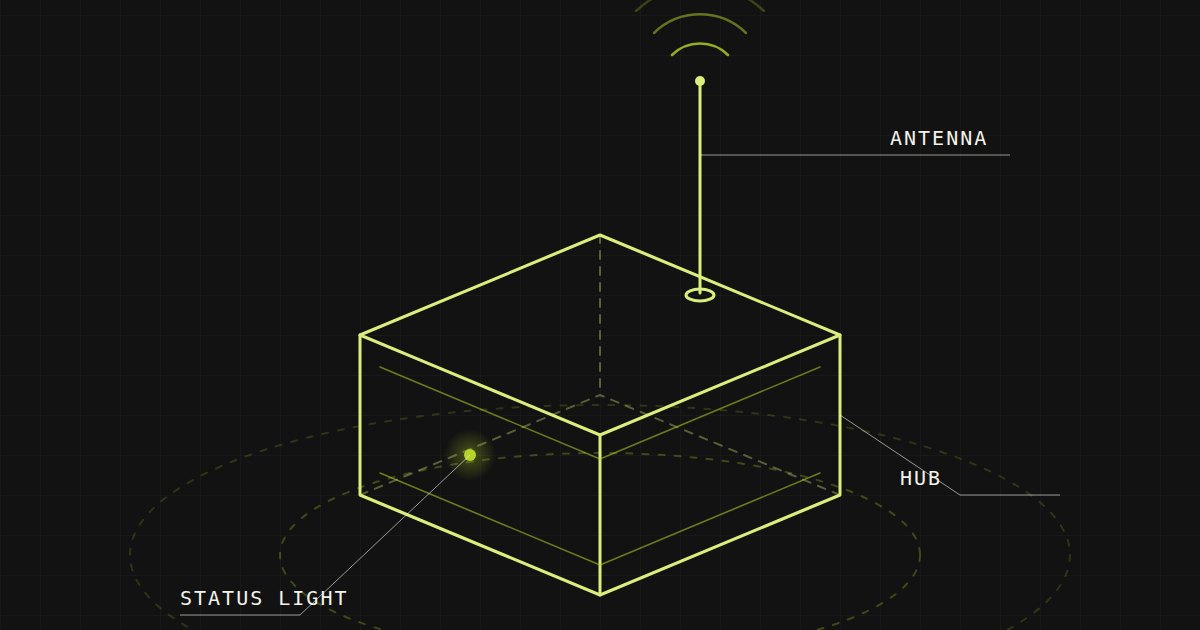
Images show concept renders. Final hardware may differ.
Stand in the doorway of a modern smart home and count the cameras. The doorbell watches the street. The floodlight watches the driveway. The nursery monitor watches your sleeping kid. Now ask a harder question: where does all that footage go?
For almost every system on the market, the answer is the same — somewhere else. Your security camera doesn't show you your front porch. It shows you a copy of your front porch, uploaded to a server farm, processed by someone else's software, and rented back to you for a monthly fee.
That arrangement has a name: cloud dependency. And it fails the people it claims to protect in three ways. First, your family's most intimate footage sits in a database you will never see, governed by terms you didn't write — one breach, one policy change, one acquisition away from becoming someone else's asset. Second, your access to your own home depends on a subscription; stop paying, and the archive of your own back yard disappears. Third, when the internet goes down — storm, outage, cut line — most of these systems go blind at the exact moment you need them most.
Security that stops working during an emergency isn't security. It's a fair-weather service with a camera attached.
We're building Alias on a different premise: the infrastructure protecting your home should answer to the people living in it. That conviction rests on the same four pillars every Alias product is built on. Privacy — what your sensors see is encrypted and stays yours, full stop. Sovereignty — the intelligence runs on hardware you own, inside your own walls, with local AI doing the thinking instead of a distant data center. Resilience — your devices talk to each other over an encrypted peer-to-peer mesh, so the system keeps working when the internet doesn't. Human ownership of data — no silent uploads, no mining your footage for advertising, no renting your own memories back to you.
When the processing happens at home, there is nothing to breach in the cloud — because there is nothing in the cloud. Not a copy. Not a thumbnail. Nothing.
Picture a Tuesday in late autumn. A windstorm takes out the internet for half the neighborhood. Sarah is at the coffee shop a few blocks from home; her two kids got back from school an hour ago. With a cloud-dependent system, her cameras are offline, her alerts are dead, and the app shows a spinner. In a sovereign home, the system never even noticed the outage. The motion sensor on the back gate trips, the alert travels hop by hop across the neighborhood's encrypted mesh, and it lands on the rugged full-touchscreen handheld in Sarah's bag — no cell tower, no internet, no company in the middle. She glances down, sees it's the neighbor's dog again, and goes back to her coffee. That's the whole story. That's the point. Boring, reliable, and entirely hers.
None of this is exotic. The hardware exists. The encryption exists. What's been missing is a company willing to build it without keeping a copy of your life as the price of admission. That's the company we're building.
Your home is the one place in the world where you should answer to no one. The infrastructure that protects it should be held to the same standard. Join the waitlist at aliascomms.com and follow along as we build security that stays home.