Privacy Tech
Your Photos Say More Than You Think
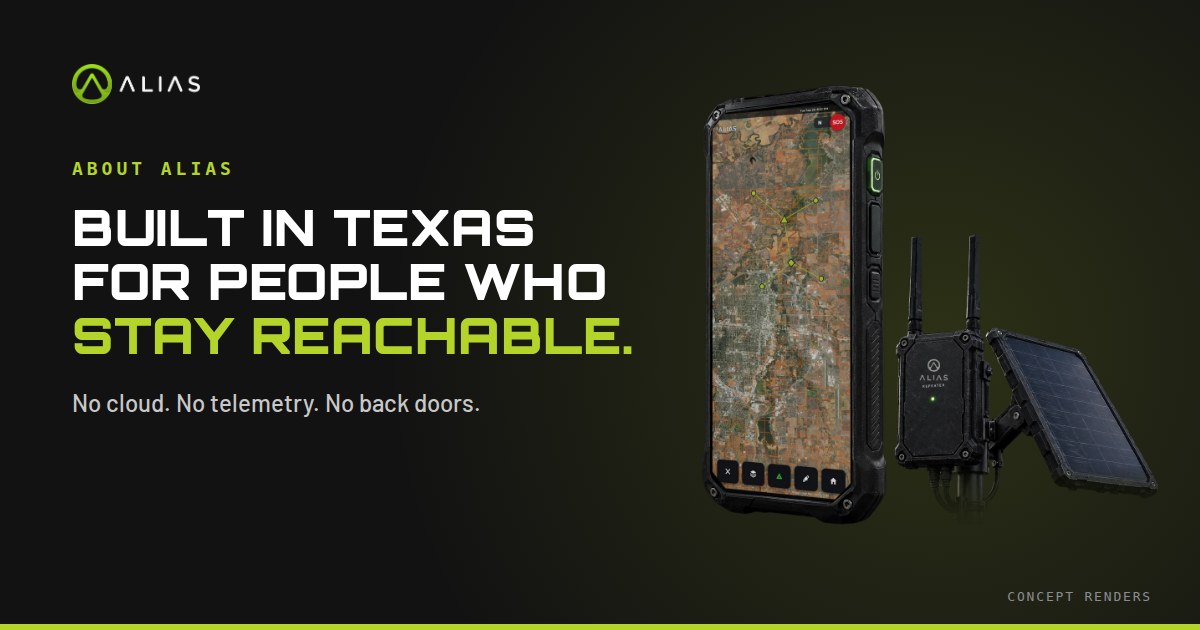
Images show concept renders. Final hardware may differ.
Take a photo with almost any phone and you get more than a picture. Tucked inside the file is a small pile of extra information called metadata, and most people never see it.
That's mostly harmless when the photo stays on your phone. It matters a lot more once you share it.
What's hiding in a photo
The most common kind of photo metadata is called EXIF. Depending on the camera and its settings, a single photo can carry:
- The exact GPS coordinates where it was taken, often accurate to a few meters
- The date and time, down to the second
- The make and model of the phone or camera
- Sometimes a device serial number, or the name of the software that edited it
- A small preview image that can survive even after the main photo is cropped
Put that together and one innocent picture of your Rogue on a fence post can tell a stranger where your fence post is, when you're usually out there, and what you were carrying.
Some sites strip it. Some don't. You can't always tell.
Some big platforms remove location data when you upload. Others keep it, keep it only for themselves, or change their policy over time. Email attachments, file-sharing links and many forums pass the original file along untouched. If you aren't sure, assume the metadata went along for the ride.
What we're doing about it
We're planning a gallery on our site where owners can share photos of their Alias gear out in the real world. When that opens, every photo will have its metadata stripped before anyone sees it, including us when we review it. That means location, time stamps, device details and embedded previews.
We won't just delete a few fields and hope for the best. Each photo will be redrawn into a brand-new file that contains only the picture, and then checked to make sure nothing identifying survived. And you'll still be in charge of the picture itself. We'd ask you to leave out house numbers, street signs, faces of people who didn't agree to it, and anything else that gives away where you live.
Protecting yourself today
You don't have to wait for us. A few habits go a long way:
- Turn off location tagging in your phone's camera settings if you don't need it.
- Before you share, check the photo's details or info panel to see what's attached.
- Use your phone's built-in option to remove location when sharing, if it has one.
- Look at the background, not just the subject. A mailbox or a distinctive skyline can give away as much as GPS.
Privacy isn't only about who carries your messages. It's also about what you hand over without realizing it. A photo should show what you meant to show, and nothing else.